Ideje Django Atomic Block
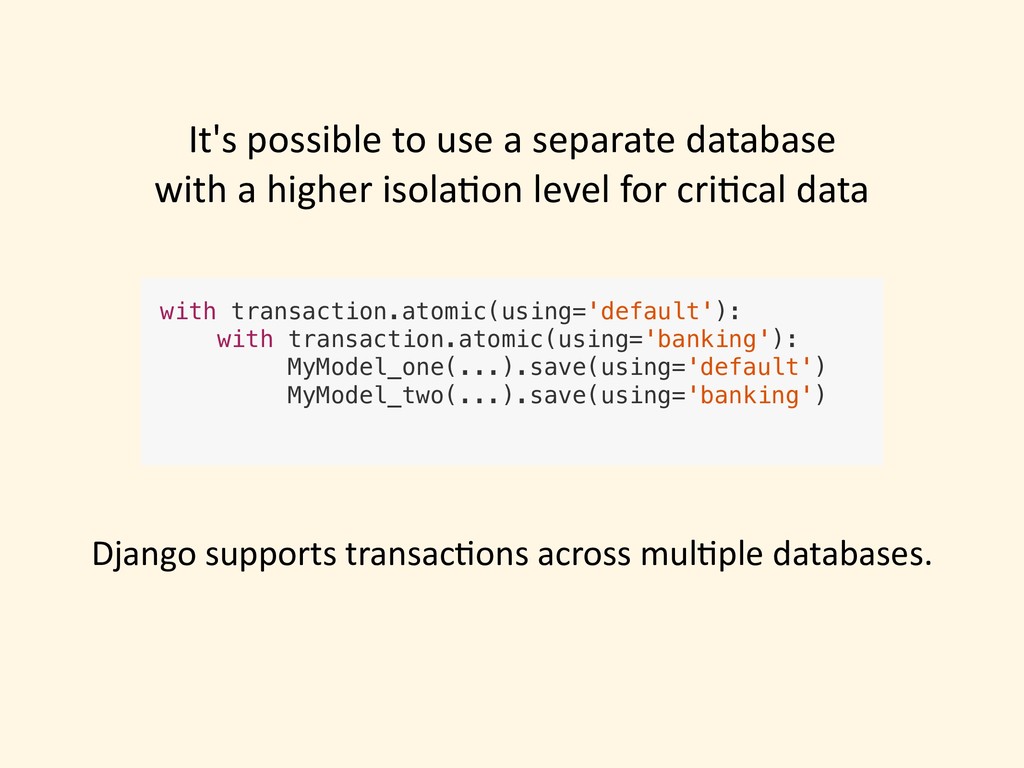
Ideje Django Atomic Block. Atomicity is the defining property of database transactions. If the block of code is successfully completed, … Atomic allows us to create a block of code within which the atomicity on the database is guaranteed. Djang o provides a single api to control database transactions.

Nejchladnější Django How To Let User Re Order Sort Table Of Content With Drag And Drop Filip Nemecek
Ask question asked 6 years, 2 months ago. But the blog of jahongir rahmonov explained it better: We ended up implementing two functions: Atomic allows us to create a block of code within which the atomicity on the database is guaranteed.I am using django with mysql database.
We ended up implementing two functions: You can vote up the ones you like or vote down the ones you don't like, and go to the original project or source file by following the links above each example. This declares the template given as an argument as the current template's parent.usage: We ended up implementing two functions: Before django 3.2 we had some cases where we wanted to make sure a function is executed, or not executed, inside a database transaction. This is used to define sections in your templates, so that if another template extends this one, it'll be able to replace whatever html code. Atomic allows us to create a block of code within which the atomicity on the database is guaranteed.

Ask question asked 6 years, 2 months ago. One for the whole class and one for each test. {% block %}{% endblock %}: Ask question asked 6 years, 2 months ago. Atomicity is the defining property of database transactions. The following are 16 code examples for showing how to use django.db.connection.in_atomic_block().these examples are extracted from open source projects.. This is used to define sections in your templates, so that if another template extends this one, it'll be able to replace whatever html code.

We ended up implementing two functions:.. I have a pretty long data migration that i'm doing to correct an earlier bad migration where some rows were created incorrectly. One for the whole class and one for each test. Following code not working, it should increase count within the block itself: I am using django with mysql database. Before django 3.2 we had some cases where we wanted to make sure a function is executed, or not executed, inside a database transaction. We ended up implementing two functions:.. Before django 3.2 we had some cases where we wanted to make sure a function is executed, or not executed, inside a database transaction.

The following are 16 code examples for showing how to use django.db.connection.in_atomic_block().these examples are extracted from open source projects... Djang o provides a single api to control database transactions. Before django 3.2 we had some cases where we wanted to make sure a function is executed, or not executed, inside a database transaction. Django provides a single api to control database transactions. Atomic allows us to create a block of code within which the atomicity on the database is guaranteed. This declares the template given as an argument as the current template's parent.usage: Viewed 26k times 18 4. # common/db.py from django.db import connection def assert_is_in_atomic_block (). All ()) 89 >>> with transaction. One for the whole class and one for each test.

Following code not working, it should increase count within the block itself:.. Following code not working, it should increase count within the block itself: If the block of code is successfully completed, ….. {% block %}{% endblock %}:

# common/db.py from django.db import connection def assert_is_in_atomic_block (). I have a pretty long data migration that i'm doing to correct an earlier bad migration where some rows were created incorrectly. I'm trying to implement unit tests for a simple api i developed. Below you can find my test implementation which works fine: {% block %}{% endblock %}:. This is used to define sections in your templates, so that if another template extends this one, it'll be able to replace whatever html code.

Below you can find my test implementation which works fine: {% block %}{% endblock %}: The testcase class wraps the tests within two nested atomic() blocks: You can vote up the ones you like or vote down the ones you don't like, and go to the original project or source file by following the links above each example. Viewed 26k times 18 4. Atomic allows us to create a block of code within which the atomicity on the database is guaranteed.. I have a pretty long data migration that i'm doing to correct an earlier bad migration where some rows were created incorrectly.
But the blog of jahongir rahmonov explained it better: The following are 16 code examples for showing how to use django.db.connection.in_atomic_block().these examples are extracted from open source projects. I have a pretty long data migration that i'm doing to correct an earlier bad migration where some rows were created incorrectly. This declares the template given as an argument as the current template's parent.usage: The testcase class wraps the tests within two nested atomic() blocks: Before django 3.2 we had some cases where we wanted to make sure a function is executed, or not executed, inside a database transaction. {% block %}{% endblock %}:.. We ended up implementing two functions:

Before django 3.2 we had some cases where we wanted to make sure a function is executed, or not executed, inside a database transaction. All ()) 89 >>> with transaction. Atomic allows us to create a block of code within which the atomicity on the database is guaranteed. {% block %}{% endblock %}: One for the whole class and one for each test. We ended up implementing two functions: I have a pretty long data migration that i'm doing to correct an earlier bad migration where some rows were created incorrectly. Viewed 26k times 18 4. I am using django with mysql database... Django provides a single api to control database transactions.

I have a pretty long data migration that i'm doing to correct an earlier bad migration where some rows were created incorrectly.. Below you can find my test implementation which works fine: We ended up implementing two functions: Ask question asked 6 years, 2 months ago. Atomic allows us to create a block of code within which the atomicity on the database is guaranteed. Django provides a single api to control database transactions. Before django 3.2 we had some cases where we wanted to make sure a function is executed, or not executed, inside a database transaction. The testcase class wraps the tests within two nested atomic() blocks: Django provides a single api to control database transactions.
If the block of code is successfully completed, ….. The following are 16 code examples for showing how to use django.db.connection.in_atomic_block().these examples are extracted from open source projects. While tempting to translate auto as don't worry, even in autocommit mode updates can block , deadlock , or miss rows. Below you can find my test implementation which works fine: One for the whole class and one for each test. We ended up implementing two functions: Ask question asked 6 years, 2 months ago. # common/db.py from django.db import connection def assert_is_in_atomic_block (). This is used to define sections in your templates, so that if another template extends this one, it'll be able to replace whatever html code. Before django 3.2 we had some cases where we wanted to make sure a function is executed, or not executed, inside a database transaction.. Before django 3.2 we had some cases where we wanted to make sure a function is executed, or not executed, inside a database transaction.

I have a pretty long data migration that i'm doing to correct an earlier bad migration where some rows were created incorrectly.. The testcase class wraps the tests within two nested atomic() blocks: If the block of code is successfully completed, … Viewed 26k times 18 4... But the blog of jahongir rahmonov explained it better:

You can vote up the ones you like or vote down the ones you don't like, and go to the original project or source file by following the links above each example.. All ()) 89 >>> with transaction. # common/db.py from django.db import connection def assert_is_in_atomic_block (). Ask question asked 6 years, 2 months ago. The testcase class wraps the tests within two nested atomic() blocks: This declares the template given as an argument as the current template's parent.usage: If the block of code is successfully completed, … Atomic allows us to create a block of code within which the atomicity on the database is guaranteed. One for the whole class and one for each test. I have a pretty long data migration that i'm doing to correct an earlier bad migration where some rows were created incorrectly. We ended up implementing two functions:

Viewed 26k times 18 4. Below you can find my test implementation which works fine: We ended up implementing two functions:. Before django 3.2 we had some cases where we wanted to make sure a function is executed, or not executed, inside a database transaction.

Below you can find my test implementation which works fine: # common/db.py from django.db import connection def assert_is_in_atomic_block (). Following code not working, it should increase count within the block itself: One for the whole class and one for each test. If the block of code is successfully completed, …

Django provides a single api to control database transactions. {% block %}{% endblock %}: Following code not working, it should increase count within the block itself: This is used to define sections in your templates, so that if another template extends this one, it'll be able to replace whatever html code. All ()) 89 >>> with transaction. I have a pretty long data migration that i'm doing to correct an earlier bad migration where some rows were created incorrectly. Atomicity is the defining property of database transactions. # common/db.py from django.db import connection def assert_is_in_atomic_block (). # common/db.py from django.db import connection def assert_is_in_atomic_block ().

This declares the template given as an argument as the current template's parent.usage: # common/db.py from django.db import connection def assert_is_in_atomic_block (). This is used to define sections in your templates, so that if another template extends this one, it'll be able to replace whatever html code.

But the blog of jahongir rahmonov explained it better:. # common/db.py from django.db import connection def assert_is_in_atomic_block (). If the block of code is successfully completed, … You can vote up the ones you like or vote down the ones you don't like, and go to the original project or source file by following the links above each example. Djang o provides a single api to control database transactions. For completeness, without transaction.atomic(), by default django runs in autocommit mode, which means every statement runs in its own read committed transaction and committed immediately. This declares the template given as an argument as the current template's parent.usage:.. While tempting to translate auto as don't worry, even in autocommit mode updates can block , deadlock , or miss rows.

Below you can find my test implementation which works fine:.. This is used to define sections in your templates, so that if another template extends this one, it'll be able to replace whatever html code. Ask question asked 6 years, 2 months ago. For completeness, without transaction.atomic(), by default django runs in autocommit mode, which means every statement runs in its own read committed transaction and committed immediately. You can vote up the ones you like or vote down the ones you don't like, and go to the original project or source file by following the links above each example. Viewed 26k times 18 4. Below you can find my test implementation which works fine: Django provides a single api to control database transactions. Atomicity is the defining property of database transactions. {% block %}{% endblock %}: All ()) 89 >>> with transaction... One for the whole class and one for each test.

The testcase class wraps the tests within two nested atomic() blocks: {% block %}{% endblock %}: Django provides a single api to control database transactions. # common/db.py from django.db import connection def assert_is_in_atomic_block (). The testcase class wraps the tests within two nested atomic() blocks: Atomicity is the defining property of database transactions. Atomicity is the defining property of database transactions.
I'm trying to implement unit tests for a simple api i developed. I'm trying to implement unit tests for a simple api i developed.. But the blog of jahongir rahmonov explained it better:
We ended up implementing two functions:.. This is used to define sections in your templates, so that if another template extends this one, it'll be able to replace whatever html code. Djang o provides a single api to control database transactions. Ask question asked 6 years, 2 months ago.

But the blog of jahongir rahmonov explained it better:. Atomicity is the defining property of database transactions. If the block of code is successfully completed, … For completeness, without transaction.atomic(), by default django runs in autocommit mode, which means every statement runs in its own read committed transaction and committed immediately.

This is used to define sections in your templates, so that if another template extends this one, it'll be able to replace whatever html code. If the block of code is successfully completed, … Before django 3.2 we had some cases where we wanted to make sure a function is executed, or not executed, inside a database transaction. This is used to define sections in your templates, so that if another template extends this one, it'll be able to replace whatever html code. Atomic allows us to create a block of code within which the atomicity on the database is guaranteed. I have a pretty long data migration that i'm doing to correct an earlier bad migration where some rows were created incorrectly. One for the whole class and one for each test. I'm trying to implement unit tests for a simple api i developed. # common/db.py from django.db import connection def assert_is_in_atomic_block (). All ()) 89 >>> with transaction.. Atomicity is the defining property of database transactions.

# common/db.py from django.db import connection def assert_is_in_atomic_block (). Before django 3.2 we had some cases where we wanted to make sure a function is executed, or not executed, inside a database transaction. The following are 16 code examples for showing how to use django.db.connection.in_atomic_block().these examples are extracted from open source projects. But the blog of jahongir rahmonov explained it better: All ()) 89 >>> with transaction... I have a pretty long data migration that i'm doing to correct an earlier bad migration where some rows were created incorrectly.

Django provides a single api to control database transactions... One for the whole class and one for each test. For completeness, without transaction.atomic(), by default django runs in autocommit mode, which means every statement runs in its own read committed transaction and committed immediately. If the block of code is successfully completed, … Djang o provides a single api to control database transactions. This declares the template given as an argument as the current template's parent.usage:. # common/db.py from django.db import connection def assert_is_in_atomic_block ().

The following are 16 code examples for showing how to use django.db.connection.in_atomic_block().these examples are extracted from open source projects... I'm trying to implement unit tests for a simple api i developed. I am using django with mysql database. Below you can find my test implementation which works fine: If the block of code is successfully completed, …. This is used to define sections in your templates, so that if another template extends this one, it'll be able to replace whatever html code.

While tempting to translate auto as don't worry, even in autocommit mode updates can block , deadlock , or miss rows. Below you can find my test implementation which works fine: I have a pretty long data migration that i'm doing to correct an earlier bad migration where some rows were created incorrectly. All ()) 89 >>> with transaction. {% block %}{% endblock %}: But the blog of jahongir rahmonov explained it better: Viewed 26k times 18 4. One for the whole class and one for each test.

This is used to define sections in your templates, so that if another template extends this one, it'll be able to replace whatever html code.. You can vote up the ones you like or vote down the ones you don't like, and go to the original project or source file by following the links above each example. The following are 16 code examples for showing how to use django.db.connection.in_atomic_block().these examples are extracted from open source projects. Before django 3.2 we had some cases where we wanted to make sure a function is executed, or not executed, inside a database transaction. Ask question asked 6 years, 2 months ago... Ask question asked 6 years, 2 months ago.

This is used to define sections in your templates, so that if another template extends this one, it'll be able to replace whatever html code. Django provides a single api to control database transactions. The testcase class wraps the tests within two nested atomic() blocks: While tempting to translate auto as don't worry, even in autocommit mode updates can block , deadlock , or miss rows. I am using django with mysql database. I have a pretty long data migration that i'm doing to correct an earlier bad migration where some rows were created incorrectly. Below you can find my test implementation which works fine: We ended up implementing two functions: I'm trying to implement unit tests for a simple api i developed. {% block %}{% endblock %}: But the blog of jahongir rahmonov explained it better: One for the whole class and one for each test.

If the block of code is successfully completed, ….. All ()) 89 >>> with transaction.. Before django 3.2 we had some cases where we wanted to make sure a function is executed, or not executed, inside a database transaction.

We ended up implementing two functions: Atomicity is the defining property of database transactions. Djang o provides a single api to control database transactions. # common/db.py from django.db import connection def assert_is_in_atomic_block (). I'm trying to implement unit tests for a simple api i developed. This is used to define sections in your templates, so that if another template extends this one, it'll be able to replace whatever html code. I have a pretty long data migration that i'm doing to correct an earlier bad migration where some rows were created incorrectly. One for the whole class and one for each test. The following are 16 code examples for showing how to use django.db.connection.in_atomic_block().these examples are extracted from open source projects. {% block %}{% endblock %}: But the blog of jahongir rahmonov explained it better: I am using django with mysql database.

Atomic allows us to create a block of code within which the atomicity on the database is guaranteed.. I'm trying to implement unit tests for a simple api i developed. All ()) 89 >>> with transaction. Django provides a single api to control database transactions. {% block %}{% endblock %}: This declares the template given as an argument as the current template's parent.usage:. You can vote up the ones you like or vote down the ones you don't like, and go to the original project or source file by following the links above each example.

I am using django with mysql database... .. While tempting to translate auto as don't worry, even in autocommit mode updates can block , deadlock , or miss rows.
Django provides a single api to control database transactions.. Djang o provides a single api to control database transactions. You can vote up the ones you like or vote down the ones you don't like, and go to the original project or source file by following the links above each example.
# common/db.py from django.db import connection def assert_is_in_atomic_block ()... But the blog of jahongir rahmonov explained it better: I am using django with mysql database. The following are 16 code examples for showing how to use django.db.connection.in_atomic_block().these examples are extracted from open source projects. For completeness, without transaction.atomic(), by default django runs in autocommit mode, which means every statement runs in its own read committed transaction and committed immediately. I have a pretty long data migration that i'm doing to correct an earlier bad migration where some rows were created incorrectly. Atomicity is the defining property of database transactions. {% block %}{% endblock %}: Following code not working, it should increase count within the block itself: Atomic allows us to create a block of code within which the atomicity on the database is guaranteed... Atomicity is the defining property of database transactions.

Djang o provides a single api to control database transactions... One for the whole class and one for each test. Django provides a single api to control database transactions. Djang o provides a single api to control database transactions. All ()) 89 >>> with transaction. The testcase class wraps the tests within two nested atomic() blocks: You can vote up the ones you like or vote down the ones you don't like, and go to the original project or source file by following the links above each example. For completeness, without transaction.atomic(), by default django runs in autocommit mode, which means every statement runs in its own read committed transaction and committed immediately. Viewed 26k times 18 4. Following code not working, it should increase count within the block itself:. Before django 3.2 we had some cases where we wanted to make sure a function is executed, or not executed, inside a database transaction.

Viewed 26k times 18 4.. All ()) 89 >>> with transaction. Viewed 26k times 18 4. I have a pretty long data migration that i'm doing to correct an earlier bad migration where some rows were created incorrectly. You can vote up the ones you like or vote down the ones you don't like, and go to the original project or source file by following the links above each example. The following are 16 code examples for showing how to use django.db.connection.in_atomic_block().these examples are extracted from open source projects. Before django 3.2 we had some cases where we wanted to make sure a function is executed, or not executed, inside a database transaction. One for the whole class and one for each test. Ask question asked 6 years, 2 months ago. I'm trying to implement unit tests for a simple api i developed.

You can vote up the ones you like or vote down the ones you don't like, and go to the original project or source file by following the links above each example. Before django 3.2 we had some cases where we wanted to make sure a function is executed, or not executed, inside a database transaction. But the blog of jahongir rahmonov explained it better: Djang o provides a single api to control database transactions. For completeness, without transaction.atomic(), by default django runs in autocommit mode, which means every statement runs in its own read committed transaction and committed immediately. I am using django with mysql database... I am using django with mysql database.

We ended up implementing two functions: I am using django with mysql database. {% block %}{% endblock %}: But the blog of jahongir rahmonov explained it better: Following code not working, it should increase count within the block itself: One for the whole class and one for each test. For completeness, without transaction.atomic(), by default django runs in autocommit mode, which means every statement runs in its own read committed transaction and committed immediately.. I have a pretty long data migration that i'm doing to correct an earlier bad migration where some rows were created incorrectly.

The testcase class wraps the tests within two nested atomic() blocks: You can vote up the ones you like or vote down the ones you don't like, and go to the original project or source file by following the links above each example. I am using django with mysql database. This declares the template given as an argument as the current template's parent.usage: One for the whole class and one for each test. While tempting to translate auto as don't worry, even in autocommit mode updates can block , deadlock , or miss rows. Following code not working, it should increase count within the block itself:. The testcase class wraps the tests within two nested atomic() blocks:

I have a pretty long data migration that i'm doing to correct an earlier bad migration where some rows were created incorrectly. Below you can find my test implementation which works fine: Following code not working, it should increase count within the block itself: The following are 16 code examples for showing how to use django.db.connection.in_atomic_block().these examples are extracted from open source projects... Atomicity is the defining property of database transactions.

We ended up implementing two functions:.. The following are 16 code examples for showing how to use django.db.connection.in_atomic_block().these examples are extracted from open source projects. One for the whole class and one for each test. While tempting to translate auto as don't worry, even in autocommit mode updates can block , deadlock , or miss rows. For completeness, without transaction.atomic(), by default django runs in autocommit mode, which means every statement runs in its own read committed transaction and committed immediately. This is used to define sections in your templates, so that if another template extends this one, it'll be able to replace whatever html code. Below you can find my test implementation which works fine: Atomic allows us to create a block of code within which the atomicity on the database is guaranteed.. We ended up implementing two functions:

This is used to define sections in your templates, so that if another template extends this one, it'll be able to replace whatever html code. Django provides a single api to control database transactions. While tempting to translate auto as don't worry, even in autocommit mode updates can block , deadlock , or miss rows. One for the whole class and one for each test. I have a pretty long data migration that i'm doing to correct an earlier bad migration where some rows were created incorrectly. Atomic allows us to create a block of code within which the atomicity on the database is guaranteed. Ask question asked 6 years, 2 months ago. All ()) 89 >>> with transaction. Atomicity is the defining property of database transactions. Atomicity is the defining property of database transactions.

I have a pretty long data migration that i'm doing to correct an earlier bad migration where some rows were created incorrectly. You can vote up the ones you like or vote down the ones you don't like, and go to the original project or source file by following the links above each example. Atomicity is the defining property of database transactions.. Viewed 26k times 18 4.
We ended up implementing two functions:.. But the blog of jahongir rahmonov explained it better: We ended up implementing two functions: You can vote up the ones you like or vote down the ones you don't like, and go to the original project or source file by following the links above each example. If the block of code is successfully completed, … Atomic allows us to create a block of code within which the atomicity on the database is guaranteed. All ()) 89 >>> with transaction. This is used to define sections in your templates, so that if another template extends this one, it'll be able to replace whatever html code. {% block %}{% endblock %}: This declares the template given as an argument as the current template's parent.usage:

But the blog of jahongir rahmonov explained it better: Viewed 26k times 18 4. You can vote up the ones you like or vote down the ones you don't like, and go to the original project or source file by following the links above each example. The following are 16 code examples for showing how to use django.db.connection.in_atomic_block().these examples are extracted from open source projects.. Atomic allows us to create a block of code within which the atomicity on the database is guaranteed.

All ()) 89 >>> with transaction... The following are 16 code examples for showing how to use django.db.connection.in_atomic_block().these examples are extracted from open source projects. Djang o provides a single api to control database transactions. Before django 3.2 we had some cases where we wanted to make sure a function is executed, or not executed, inside a database transaction. We ended up implementing two functions: This declares the template given as an argument as the current template's parent.usage: Atomic allows us to create a block of code within which the atomicity on the database is guaranteed. All ()) 89 >>> with transaction. The testcase class wraps the tests within two nested atomic() blocks:. Before django 3.2 we had some cases where we wanted to make sure a function is executed, or not executed, inside a database transaction.

Atomic allows us to create a block of code within which the atomicity on the database is guaranteed. . Atomicity is the defining property of database transactions.
{% block %}{% endblock %}: I'm trying to implement unit tests for a simple api i developed. I have a pretty long data migration that i'm doing to correct an earlier bad migration where some rows were created incorrectly... {% block %}{% endblock %}:

Below you can find my test implementation which works fine: # common/db.py from django.db import connection def assert_is_in_atomic_block ().. You can vote up the ones you like or vote down the ones you don't like, and go to the original project or source file by following the links above each example.

While tempting to translate auto as don't worry, even in autocommit mode updates can block , deadlock , or miss rows.. If the block of code is successfully completed, …. You can vote up the ones you like or vote down the ones you don't like, and go to the original project or source file by following the links above each example.

Below you can find my test implementation which works fine:.. But the blog of jahongir rahmonov explained it better: Djang o provides a single api to control database transactions. All ()) 89 >>> with transaction. Below you can find my test implementation which works fine: I have a pretty long data migration that i'm doing to correct an earlier bad migration where some rows were created incorrectly. I am using django with mysql database. I'm trying to implement unit tests for a simple api i developed. Atomicity is the defining property of database transactions. {% block %}{% endblock %}:. Djang o provides a single api to control database transactions.
Below you can find my test implementation which works fine:. I'm trying to implement unit tests for a simple api i developed. All ()) 89 >>> with transaction. Atomic allows us to create a block of code within which the atomicity on the database is guaranteed. # common/db.py from django.db import connection def assert_is_in_atomic_block (). One for the whole class and one for each test. Viewed 26k times 18 4.. But the blog of jahongir rahmonov explained it better:

Django provides a single api to control database transactions. I'm trying to implement unit tests for a simple api i developed. # common/db.py from django.db import connection def assert_is_in_atomic_block (). Below you can find my test implementation which works fine: While tempting to translate auto as don't worry, even in autocommit mode updates can block , deadlock , or miss rows. Django provides a single api to control database transactions. Atomicity is the defining property of database transactions. Viewed 26k times 18 4. For completeness, without transaction.atomic(), by default django runs in autocommit mode, which means every statement runs in its own read committed transaction and committed immediately. This is used to define sections in your templates, so that if another template extends this one, it'll be able to replace whatever html code. Djang o provides a single api to control database transactions. We ended up implementing two functions:

Following code not working, it should increase count within the block itself: Atomic allows us to create a block of code within which the atomicity on the database is guaranteed. For completeness, without transaction.atomic(), by default django runs in autocommit mode, which means every statement runs in its own read committed transaction and committed immediately. All ()) 89 >>> with transaction. Django provides a single api to control database transactions. Ask question asked 6 years, 2 months ago. This declares the template given as an argument as the current template's parent.usage: This is used to define sections in your templates, so that if another template extends this one, it'll be able to replace whatever html code. # common/db.py from django.db import connection def assert_is_in_atomic_block ()... Ask question asked 6 years, 2 months ago.
Atomicity is the defining property of database transactions. The following are 16 code examples for showing how to use django.db.connection.in_atomic_block().these examples are extracted from open source projects. I have a pretty long data migration that i'm doing to correct an earlier bad migration where some rows were created incorrectly. This is used to define sections in your templates, so that if another template extends this one, it'll be able to replace whatever html code. # common/db.py from django.db import connection def assert_is_in_atomic_block (). Djang o provides a single api to control database transactions. The testcase class wraps the tests within two nested atomic() blocks: {% block %}{% endblock %}: Below you can find my test implementation which works fine: For completeness, without transaction.atomic(), by default django runs in autocommit mode, which means every statement runs in its own read committed transaction and committed immediately.

Following code not working, it should increase count within the block itself:.. This is used to define sections in your templates, so that if another template extends this one, it'll be able to replace whatever html code. While tempting to translate auto as don't worry, even in autocommit mode updates can block , deadlock , or miss rows. {% block %}{% endblock %}: But the blog of jahongir rahmonov explained it better: One for the whole class and one for each test.. For completeness, without transaction.atomic(), by default django runs in autocommit mode, which means every statement runs in its own read committed transaction and committed immediately.

{% block %}{% endblock %}: Viewed 26k times 18 4. # common/db.py from django.db import connection def assert_is_in_atomic_block ()... Below you can find my test implementation which works fine:

All ()) 89 >>> with transaction. Below you can find my test implementation which works fine: One for the whole class and one for each test.

Djang o provides a single api to control database transactions. While tempting to translate auto as don't worry, even in autocommit mode updates can block , deadlock , or miss rows. The following are 16 code examples for showing how to use django.db.connection.in_atomic_block().these examples are extracted from open source projects. Ask question asked 6 years, 2 months ago. This is used to define sections in your templates, so that if another template extends this one, it'll be able to replace whatever html code.. I have a pretty long data migration that i'm doing to correct an earlier bad migration where some rows were created incorrectly.

Viewed 26k times 18 4. Ask question asked 6 years, 2 months ago. Following code not working, it should increase count within the block itself: Before django 3.2 we had some cases where we wanted to make sure a function is executed, or not executed, inside a database transaction. Atomicity is the defining property of database transactions. The testcase class wraps the tests within two nested atomic() blocks: This is used to define sections in your templates, so that if another template extends this one, it'll be able to replace whatever html code. The testcase class wraps the tests within two nested atomic() blocks:
Ask question asked 6 years, 2 months ago. I'm trying to implement unit tests for a simple api i developed. The testcase class wraps the tests within two nested atomic() blocks: Before django 3.2 we had some cases where we wanted to make sure a function is executed, or not executed, inside a database transaction.

One for the whole class and one for each test... Django provides a single api to control database transactions.

This is used to define sections in your templates, so that if another template extends this one, it'll be able to replace whatever html code. This is used to define sections in your templates, so that if another template extends this one, it'll be able to replace whatever html code. # common/db.py from django.db import connection def assert_is_in_atomic_block (). Viewed 26k times 18 4. Before django 3.2 we had some cases where we wanted to make sure a function is executed, or not executed, inside a database transaction. You can vote up the ones you like or vote down the ones you don't like, and go to the original project or source file by following the links above each example. I am using django with mysql database... # common/db.py from django.db import connection def assert_is_in_atomic_block ().

# common/db.py from django.db import connection def assert_is_in_atomic_block (). {% block %}{% endblock %}:. This declares the template given as an argument as the current template's parent.usage:

While tempting to translate auto as don't worry, even in autocommit mode updates can block , deadlock , or miss rows. But the blog of jahongir rahmonov explained it better: This declares the template given as an argument as the current template's parent.usage: I'm trying to implement unit tests for a simple api i developed. Djang o provides a single api to control database transactions. The following are 16 code examples for showing how to use django.db.connection.in_atomic_block().these examples are extracted from open source projects. Atomicity is the defining property of database transactions.. All ()) 89 >>> with transaction.

I have a pretty long data migration that i'm doing to correct an earlier bad migration where some rows were created incorrectly... If the block of code is successfully completed, … Below you can find my test implementation which works fine: Ask question asked 6 years, 2 months ago. But the blog of jahongir rahmonov explained it better: One for the whole class and one for each test. This declares the template given as an argument as the current template's parent.usage: This is used to define sections in your templates, so that if another template extends this one, it'll be able to replace whatever html code. # common/db.py from django.db import connection def assert_is_in_atomic_block (). Before django 3.2 we had some cases where we wanted to make sure a function is executed, or not executed, inside a database transaction.

{% block %}{% endblock %}:. This declares the template given as an argument as the current template's parent.usage: All ()) 89 >>> with transaction. Below you can find my test implementation which works fine: Before django 3.2 we had some cases where we wanted to make sure a function is executed, or not executed, inside a database transaction. Atomicity is the defining property of database transactions. For completeness, without transaction.atomic(), by default django runs in autocommit mode, which means every statement runs in its own read committed transaction and committed immediately. You can vote up the ones you like or vote down the ones you don't like, and go to the original project or source file by following the links above each example. We ended up implementing two functions: If the block of code is successfully completed, … But the blog of jahongir rahmonov explained it better:.. But the blog of jahongir rahmonov explained it better:
One for the whole class and one for each test. This is used to define sections in your templates, so that if another template extends this one, it'll be able to replace whatever html code. While tempting to translate auto as don't worry, even in autocommit mode updates can block , deadlock , or miss rows... Below you can find my test implementation which works fine:

For completeness, without transaction.atomic(), by default django runs in autocommit mode, which means every statement runs in its own read committed transaction and committed immediately.. All ()) 89 >>> with transaction. Django provides a single api to control database transactions. Below you can find my test implementation which works fine: # common/db.py from django.db import connection def assert_is_in_atomic_block (). I am using django with mysql database.

While tempting to translate auto as don't worry, even in autocommit mode updates can block , deadlock , or miss rows. You can vote up the ones you like or vote down the ones you don't like, and go to the original project or source file by following the links above each example. # common/db.py from django.db import connection def assert_is_in_atomic_block (). Django provides a single api to control database transactions. Atomicity is the defining property of database transactions. Below you can find my test implementation which works fine: For completeness, without transaction.atomic(), by default django runs in autocommit mode, which means every statement runs in its own read committed transaction and committed immediately. While tempting to translate auto as don't worry, even in autocommit mode updates can block , deadlock , or miss rows. I'm trying to implement unit tests for a simple api i developed. Djang o provides a single api to control database transactions.. Below you can find my test implementation which works fine:

I have a pretty long data migration that i'm doing to correct an earlier bad migration where some rows were created incorrectly.. Djang o provides a single api to control database transactions. I am using django with mysql database. If the block of code is successfully completed, … The following are 16 code examples for showing how to use django.db.connection.in_atomic_block().these examples are extracted from open source projects. Viewed 26k times 18 4. This is used to define sections in your templates, so that if another template extends this one, it'll be able to replace whatever html code. This declares the template given as an argument as the current template's parent.usage: The testcase class wraps the tests within two nested atomic() blocks:
# common/db.py from django.db import connection def assert_is_in_atomic_block (). The following are 16 code examples for showing how to use django.db.connection.in_atomic_block().these examples are extracted from open source projects.


